Professional Capstone Project
Design Based Research Project
Research Study
For my Learning Design Capstone, I conducted a Design-Based Research (DBR) study investigating how adult caregivers of young children in swim lessons experience a back float e-learning module and how it influences their confidence and preparedness to practice at home. Using a mixed methods approach, I collected pre- and post-course data through Likert-scale surveys and open-ended questionnaires with six caregiver participants. Results showed measurable increases in confidence, understanding of proper handholds, and readiness to support back float practice outside of lessons. Participants consistently described the module's multimedia elements videos, infographics, knowledge checks, and discussion prompts as informative, accessible, and confidence-building. The study was grounded in adult learning theory, multimedia learning research, and principles of self-efficacy and skill transfer.
Canvas Course
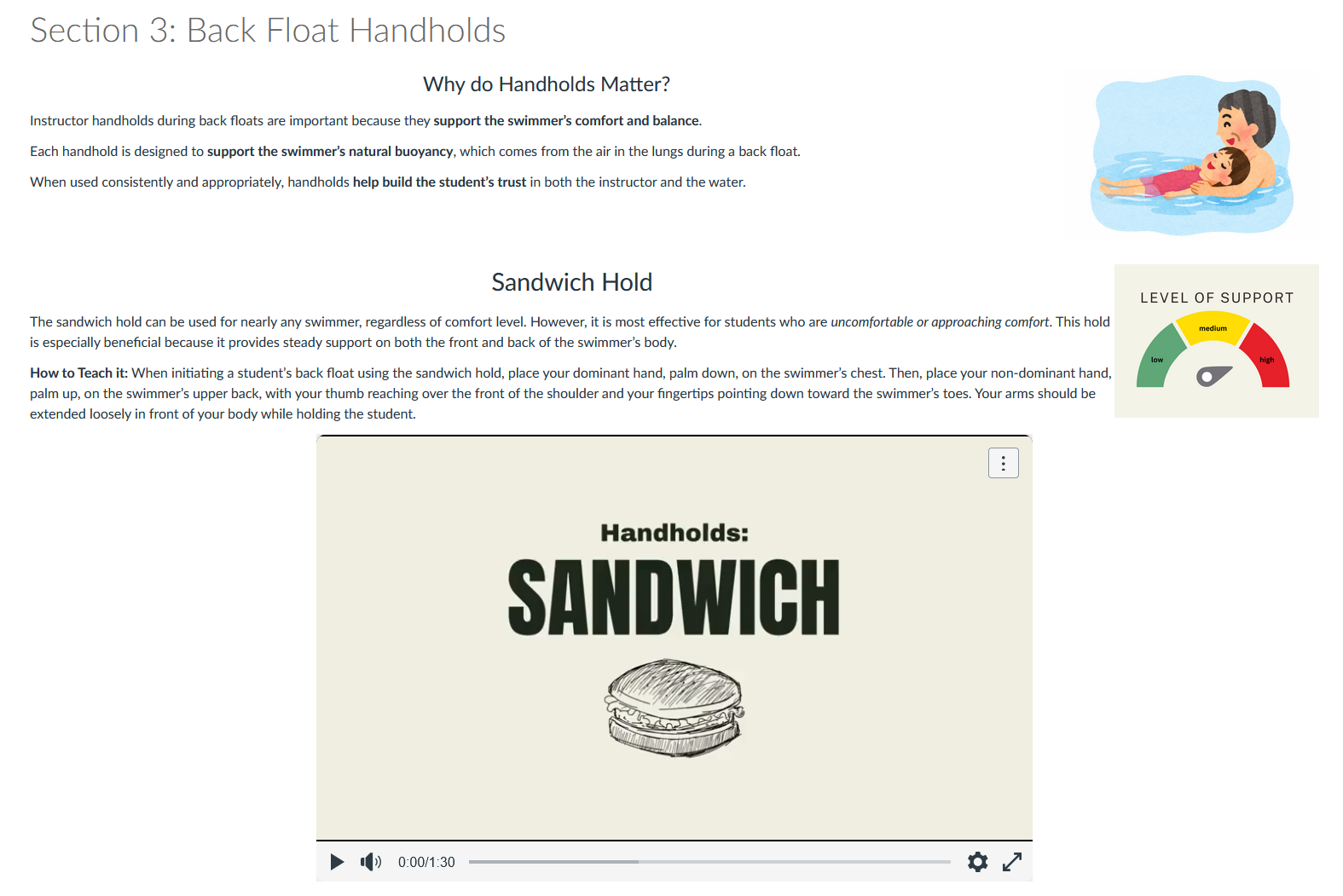
To address the instructional problem, I designed and built a fully original, one-hour asynchronous e-learning module in Canvas for adult caregivers of beginner swimmers. I developed all course content from scratch, filming and editing instructional videos, creating custom infographics, writing scaffolded text, and building interactive knowledge checks and scenario-based discussion activities. The module walks caregivers through the back float progression, covering comfort cues, body positioning, and three specific handholds. The module uses a consistent visual design and is aligned with SUNY Online Course Quality Review standards. Accessibility features including captions, alt text, and clear navigation were built in throughout. The result is a practical, visually engaging learning experience that equips caregivers to confidently support their child's swimming development between lessons.
E-Learning Proposals & Evidence-Based Solutions
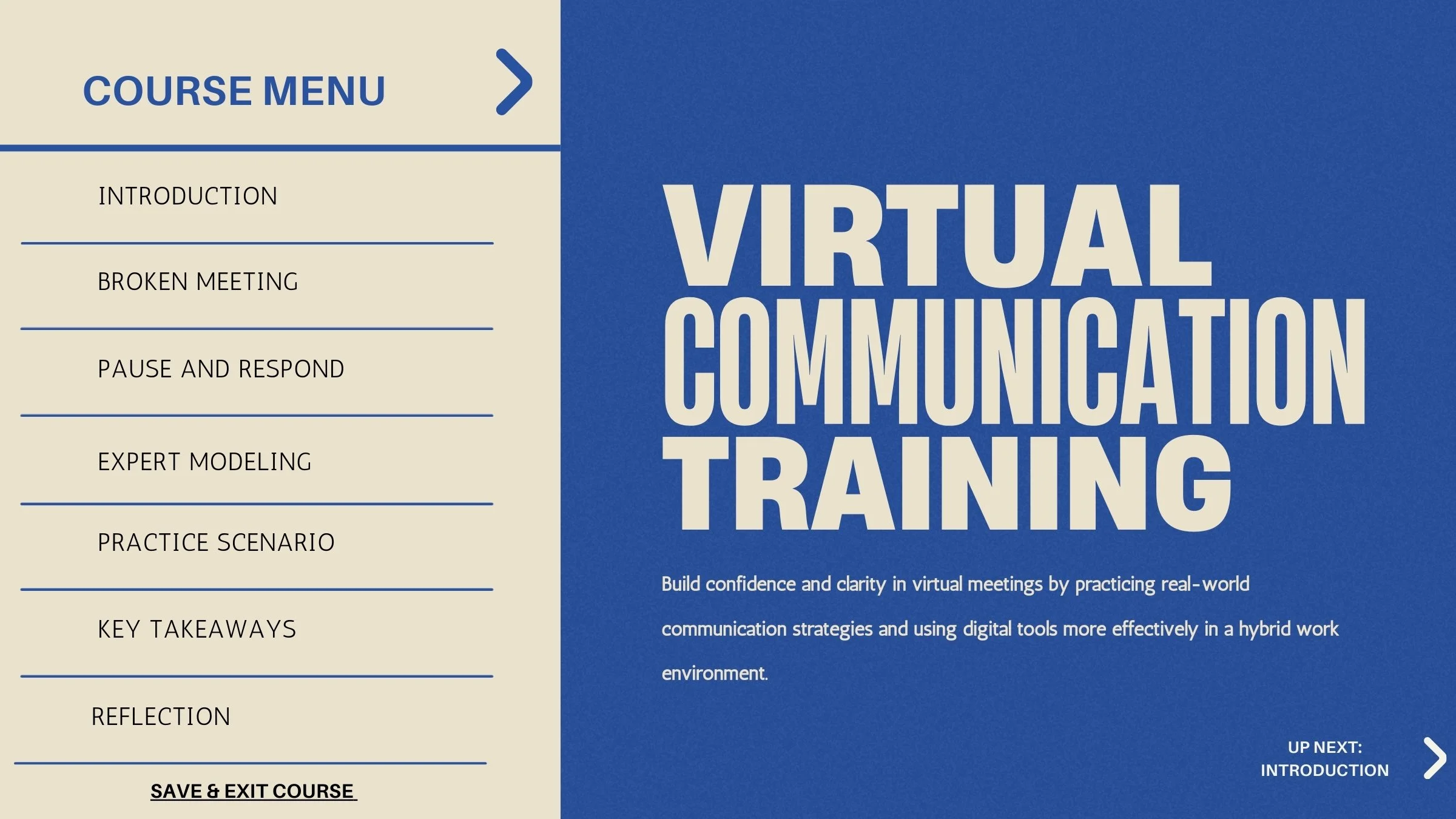
Course Mockup: Virtual Communication Training
I created the following one-hour training module mockup in response to a case study scenario. I completed a needs analysis, empathy map, and storyboard for the company to guide my course design
I built this course in response to the identified need for improved communication and collaboration in a virtual environment.
Solutions for Adult E-Learning Challenges
A research-driven analysis of the most common barriers adult learners face in online environments, including
time constraints
cognitive overload
financial limitations
accessibility needs
confidence gaps
isolation
In this project, I translated adult learning theory and cognitive load research into evidence-based design solutions. The result is a practical framework for building online experiences that reduce friction, increase persistence, and align course structure with the realities of adult learners.
Scenario Based Staff Onboarding: Fitness Studio
A boutique heated fitness studio needed a scalable way to onboard new employees across roles while ensuring consistent messaging around guest safety and studio expectations.
I designed a short scenario-based onboarding module that prepares staff to respond to common guest concerns, particularly around heated workout safety.
The learning experience combines practical service scenarios, concise content segments, and reflection activities to help employees build confidence before interacting with guests in the studio.
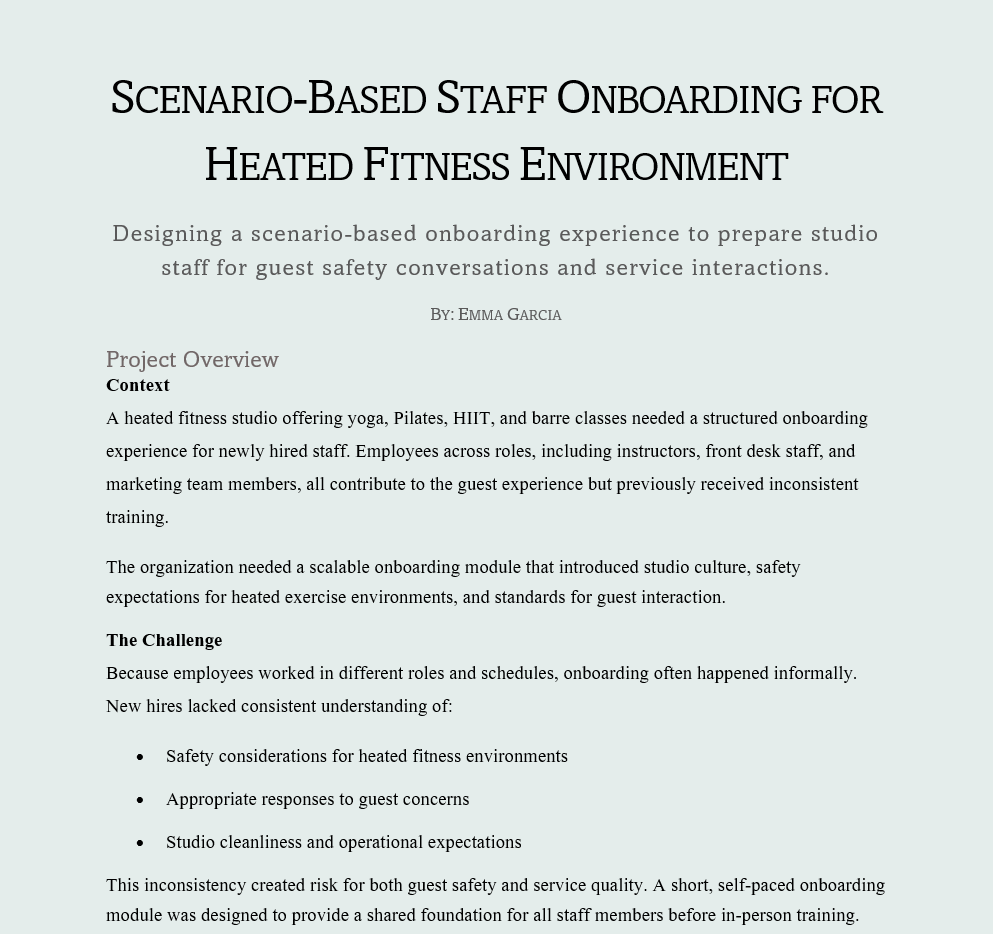
Clinical Decision Making in Psychiatric Nursing
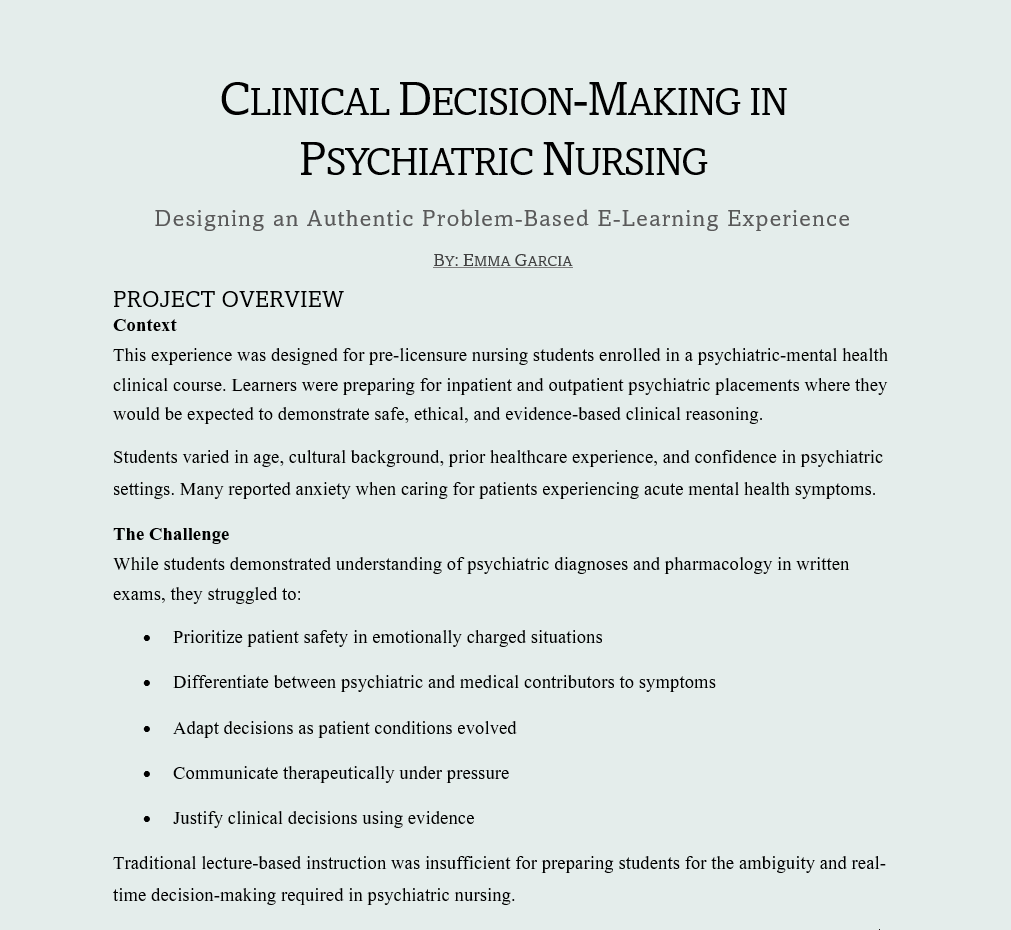
Pre-licensure nursing students entering psychiatric clinical placements often struggle with real-time clinical reasoning under ambiguity. I designed a live, problem-based e-learning experience that immersed learners in an unfolding psychiatric case requiring adaptive decision-making and collaborative inquiry.
The experience centered on facilitator-guided simulation, branching case progression, structured debrief, and reflective assessment to strengthen safety prioritization, therapeutic communication, and evidence-based clinical judgment.
Patient Equity in Clinical Practice
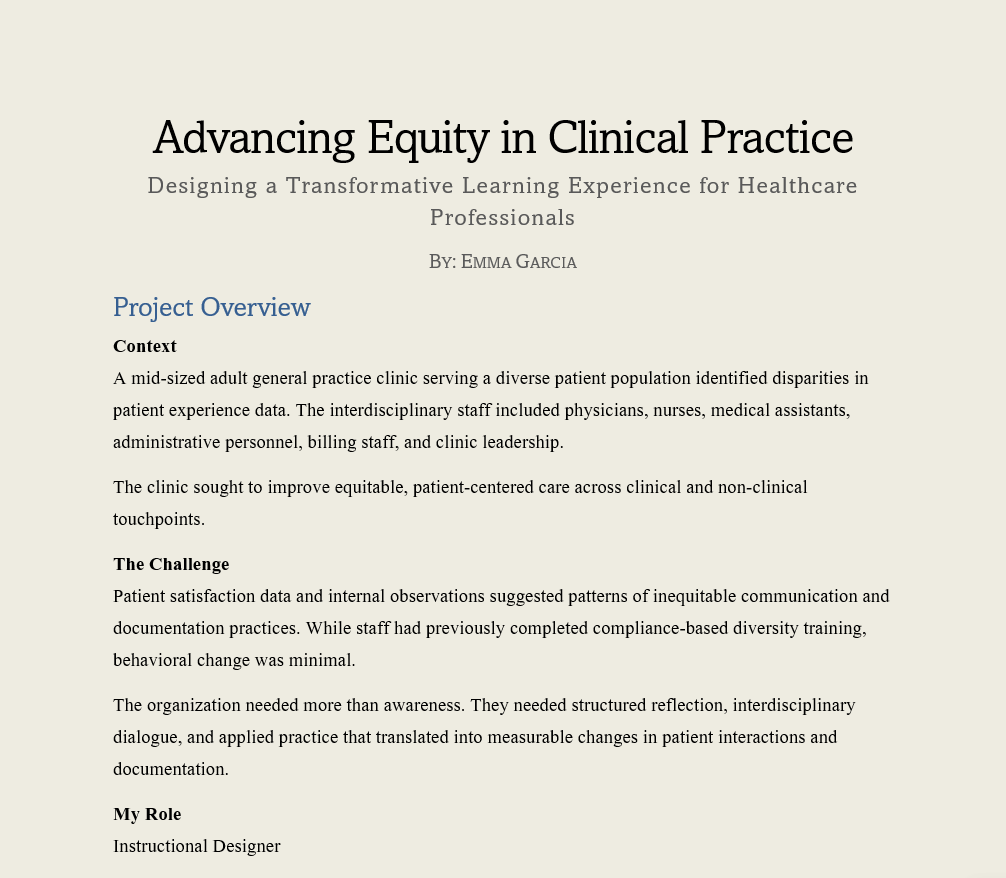
A general practice clinic identified disparities in patient experience data. I designed a transformative, scenario-based learning experience to move staff beyond awareness toward observable behavior change in documentation and communication practices.
The experience integrated interdisciplinary dialogue, performance-based assessment, and applied documentation revision to support equitable, patient-centered care.
Pre-flight Safety Simulation
A commercial pilot training program required students to demonstrate independent mastery of cockpit pre-flight safety procedures before advancing to live aircraft operations.
I designed a competency-based, simulation-driven e-learning experience that required 100% procedural accuracy, incorporated targeted remediation pathways, and aligned assessment directly to flight readiness standards.
The solution prioritized behavioral precision, autonomous performance, and safety accountability within a high-stakes aviation environment.

Coordinated Emergency Response Simulation
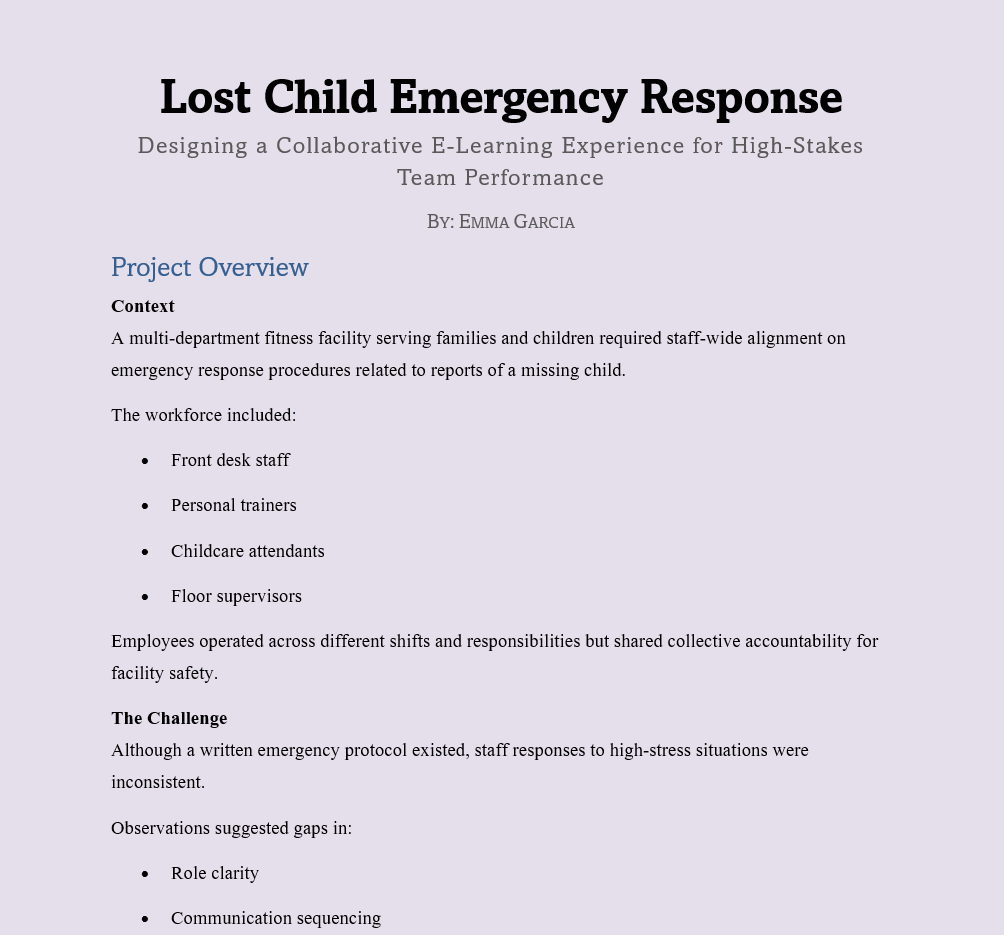
When a family fitness facility identified inconsistencies in staff responses to missing child reports, I designed a blended, scenario-based learning experience to strengthen coordinated emergency performance across departments.
The experience integrated interactive e-learning, role-based simulation, and performance-based assessment to ensure staff could execute emergency protocols with clarity, confidence, and precision under pressure.
Decoding Digital Media: Teaching Critical Media Analysis
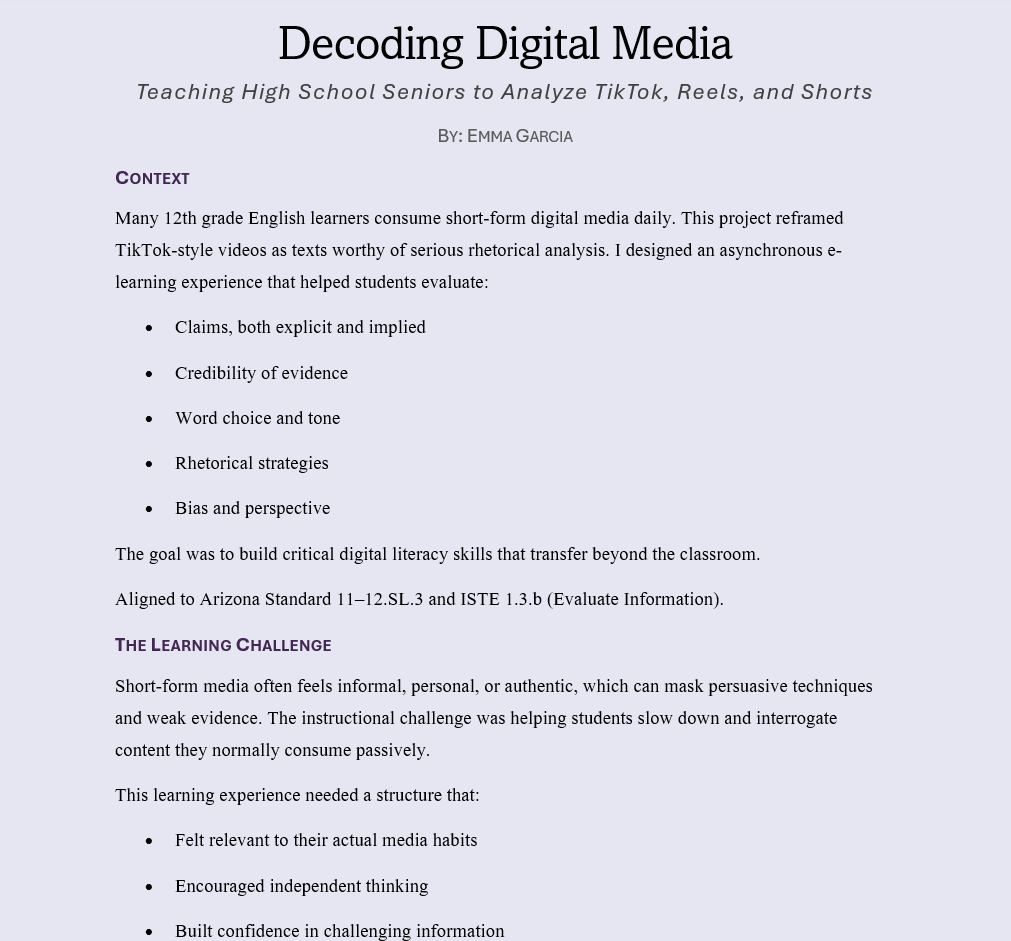
Many high school seniors consume short-form media daily, yet often miss opportunities to evaluate its credibility. I designed an asynchronous e-learning experience that reframes TikTok, Reels, and Shorts as rhetorical texts worthy of analysis.
Students analyzed claims, tone, evidence, and bias using structured frameworks and peer dialogue to strengthen digital literacy and critical thinking skills aligned to state and ISTE standards.
Evaluating Political Decisions & Lasting Impact
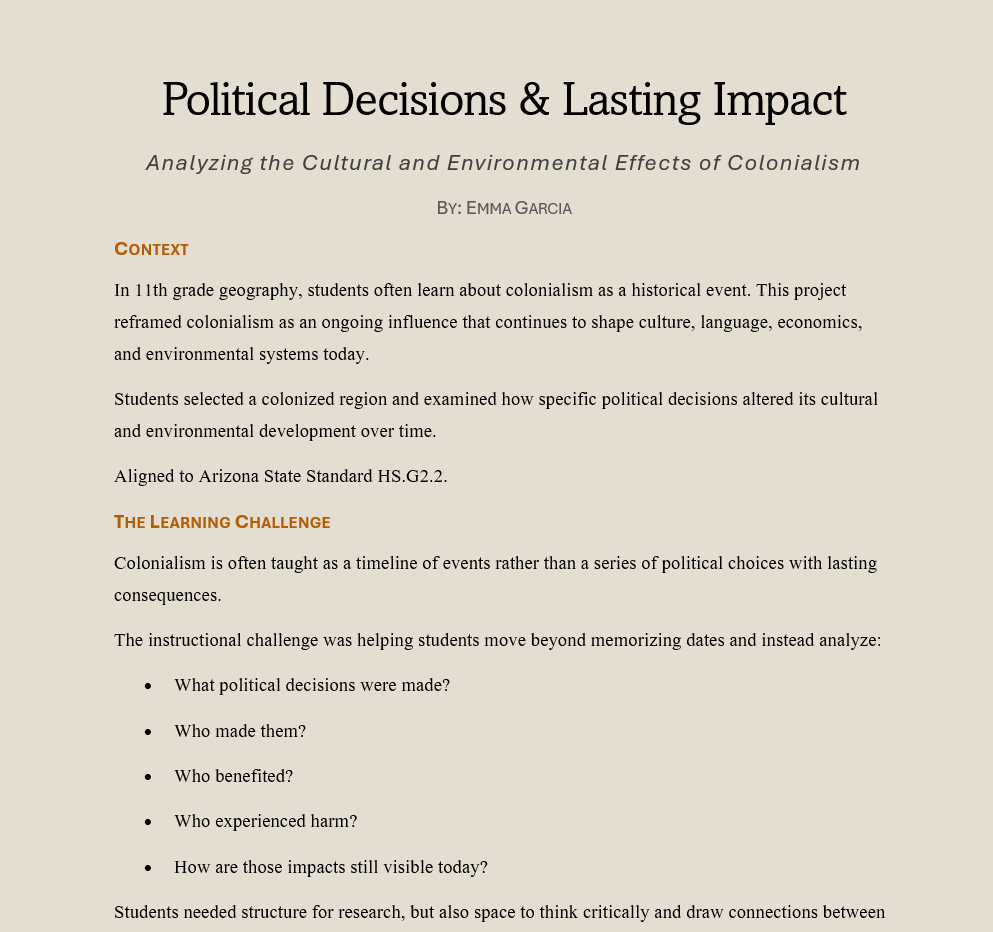
In high school geography, colonialism is often taught as history. This project challenged students to examine it as a series of political decisions with lasting cultural and environmental consequences.
Through guided research, peer inquiry, and reflective analysis, students traced how power shaped place and connected historical systems to modern global realities.
Evidence-Based Solutions for K–12 E-Learning Challenges
Context: Needs analysis and solution design for common barriers in online K–12 learning environments
What I Did:
Identified five high-impact learner challenges
Analyzed causes and instructional implications
Proposed research-supported design strategies
Aligned recommendations to UDL, SEL, and social presence frameworks